Please Choose Your Language


Views: 0 Author: Site Editor Publish Time: 2025-11-14 Origin: Site


Ever wondered how water can heat a home? A Water Source Heat Pump offers clean, stable energy from nearby water. This article explains what a Water Source Heat Pump is and how it works.
You will learn the basics and see if it fits your project needs.
A Water Source Heat Pump uses the heat stored in water to provide heating, cooling, and hot water for buildings. It draws energy from lakes, ponds, rivers, or groundwater. Because water holds heat well, it allows the system to reach higher efficiency than many air-based alternatives. This technology is becoming popular in commercial and residential developments. Teams use it to support decarbonization goals and cut utility costs. The system also supports modern hydronic networks and district energy solutions. Commercial projects often use WSHPs to replace older boiler-chiller setups due to efficiency gains.
This section provides an in-depth explanation of the water source heat pump (WSHP) system, ensuring readers gain a solid understanding of the core technology before exploring its types, applications, or benefits. Understanding the fundamental workings of a WSHP is crucial for building designers, engineers, and property owners who want to optimize energy efficiency, reduce operating costs, and select the most suitable system for their project requirements. By examining how it functions, its key components, and operational principles, readers can better appreciate why WSHPs are increasingly chosen in modern residential, commercial, and industrial buildings.
A Water Source Heat Pump is an advanced heating and cooling device that moves heat between indoor spaces and a nearby body of water, such as lakes, rivers, ponds, or groundwater reservoirs. Unlike traditional heating systems that rely on burning fuel, WSHPs operate by shifting thermal energy using electricity and refrigerant cycles. This allows them to deliver consistent heating and cooling without producing direct emissions, making them an environmentally friendly alternative. By harnessing energy stored naturally in water, WSHPs provide reliable indoor climate control year-round, and their modular design often allows for integration with existing HVAC systems or large-scale district energy networks.
Water is a highly effective medium for heat transfer because it maintains a relatively stable temperature throughout the year, even when air temperatures fluctuate dramatically between seasons. This stability provides a predictable and steady source of thermal energy for the WSHP, which helps maintain consistent indoor comfort. Moreover, water's ability to store and transfer heat efficiently reduces performance losses in winter when air-source heat pumps might struggle. In addition, using water as a heat source allows engineers to design systems that achieve higher coefficients of performance (COP), translating into lower energy consumption, reduced operating costs, and a smaller carbon footprint for both commercial and residential projects.
A typical Water Source Heat Pump system comprises several critical components, each playing a vital role in the transfer and distribution of thermal energy:
Evaporator: This component absorbs heat from the water source, causing the refrigerant to vaporize and capture thermal energy efficiently. Its design determines how effectively the system extracts heat from water, and it often includes corrosion-resistant materials to withstand long-term operation in aquatic environments.
Compressor: The compressor increases the pressure and temperature of the refrigerant vapor. This stage is essential because it upgrades the captured heat to a level suitable for indoor heating applications or domestic hot water systems. Modern compressors are optimized for energy efficiency and low noise operation.
Condenser: In this unit, the high-temperature refrigerant releases its heat into the building's heating system, such as radiators, underfloor heating, or hot water circuits. The condenser's performance directly affects the system's overall efficiency and ability to maintain comfortable indoor temperatures.
Loop System: This network of pipes or channels circulates fluid between the water source and the heat pump. It ensures continuous heat transfer and can be configured as either a closed-loop system with antifreeze-filled piping or an open-loop system using natural water flow.
One of the main reasons engineers favor water source heat pumps is water's superior thermal conductivity compared with soil or air. Because water transfers heat more efficiently, the system can absorb larger amounts of energy in a shorter time, resulting in higher efficiency and quicker response to heating or cooling demands. This principle allows WSHPs to maintain consistent indoor temperatures with minimal energy loss. Additionally, the rapid heat transfer reduces the strain on compressors and other components, extending the system's lifespan and lowering long-term maintenance costs. Efficiency-focused projects, especially in commercial developments or multi-story buildings, often rely on WSHPs to meet stringent sustainability and energy performance targets.
Water source heat pumps can operate using two primary system designs: closed-loop or open-loop.
Closed-Loop Systems: In closed-loop designs, a sealed network of pipes, often filled with a mixture of water and antifreeze, is submerged in a water body or installed underground. The fluid circulates continuously within this loop without directly contacting the surrounding water. Closed-loop systems are highly reliable, require less maintenance, and minimize environmental impact, making them suitable for lakes, ponds, and reservoirs where water quality may vary.
Open-Loop Systems: Open-loop designs extract water from a natural source, pass it through a heat exchanger to capture thermal energy, and then return the cooled water to a separate discharge point, often another well or water body. These systems can provide high efficiency when water flow and quality are sufficient but require careful environmental management and regulatory compliance.
The first stage of a Water Source Heat Pump involves collecting heat from a nearby water source. The system circulates a cold fluid—often a water-glycol mixture—through submerged pipes placed in lakes, ponds, rivers, or wells. In open-loop systems, natural water is pumped directly through an intake and passes through a heat exchanger. As the fluid flows through the system, it absorbs thermal energy from the surrounding water, which typically maintains a stable temperature year-round. This heat collection stage is critical because the efficiency of the entire system depends on how effectively heat can be extracted from the water before it enters the evaporator. Proper placement of pipes and ensuring sufficient water flow are essential for maximizing energy capture and maintaining consistent performance over time.
Once the heat-laden fluid reaches the evaporator, the next step is the transfer of energy to the refrigerant. Inside the evaporator, the heat absorbed from the water raises the temperature of the refrigerant, causing it to change phase from liquid to vapor. This phase change is a key part of the heat pump's efficiency, as it allows the system to carry large amounts of energy with relatively little input. The evaporator is carefully designed to maximize contact between the heat-carrying fluid and the refrigerant, ensuring optimal energy transfer. During this stage, the refrigerant remains at a low pressure, which facilitates its evaporation at lower temperatures, making it suitable for extracting heat even in colder water sources.
After the refrigerant has evaporated into a gas, it enters the compressor. The compressor's role is to increase the vapor's pressure, which in turn raises its temperature. This process effectively upgrades the heat collected from the water, making it hot enough to be useful for space heating or hot water production. The compression stage is energy-intensive but essential, as it determines the output temperature available for the building. Modern compressors are designed for high efficiency, minimizing electricity consumption while maximizing thermal output. Engineers often select variable-speed compressors to match building demand, ensuring consistent comfort levels and energy savings throughout the day.
Once the refrigerant has been compressed and heated, it moves to the condenser. Here, the refrigerant releases its heat into the building's heating system, which may include radiators, underfloor heating circuits, or domestic hot water tanks. The refrigerant then cools and returns to the evaporator to repeat the cycle. In cooling mode, the process reverses: the system extracts heat from indoor spaces and transfers it back to the water source, effectively acting as an air conditioner. This reverse-cycle operation often eliminates the need for separate chillers in mixed-use buildings, simplifying design and reducing capital costs. Careful design and proper integration with the building's distribution network are crucial to ensure uniform temperature delivery, energy efficiency, and long-term reliability of the system.
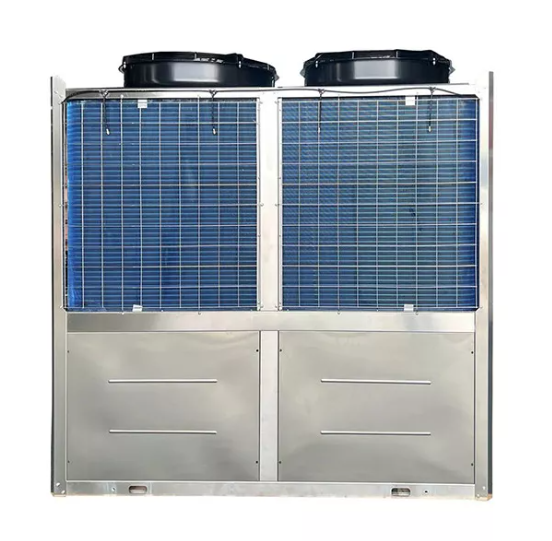
Closed-loop systems use a network of sealed piping filled with a mixture of water and antifreeze, such as glycol. These pipes are submerged in a water body, but the working fluid never comes into direct contact with the surrounding water. Heat is absorbed or rejected through the pipe walls, making the system highly reliable and durable. This design is particularly well-suited for lakes, ponds, and reservoirs where water quality or environmental regulations limit direct extraction. Closed-loop systems require minimal maintenance and provide consistent performance over time, making them a preferred choice for projects where long-term stability and operational simplicity are priorities.
Open-loop systems operate by directly extracting water from a well, borehole, or other water sources. The water passes through a heat exchanger, transferring its thermal energy to the refrigerant before being discharged to a separate return point or drainage location. This system takes advantage of abundant water flow to maximize energy transfer efficiency. Open-loop designs often provide higher heat output per unit of water than closed-loop systems but require careful attention to water quality and environmental compliance. Proper filtration and monitoring are essential to prevent scaling, corrosion, or biological growth within the system, ensuring reliable long-term operation.
Selecting the right WSHP type depends on site conditions and project goals. Closed-loop systems are recommended when simplicity, low maintenance, and long-term reliability are key considerations. They work effectively even in environments with fluctuating water quality or strict regulatory restrictions. Open-loop systems are advantageous when there is a high water flow rate and easy access to drilling points. They can deliver greater heating or cooling capacity and faster response to load changes. Project teams must evaluate site-specific factors such as water availability, seasonal temperature variation, and potential environmental impacts to make an informed choice between the two types.
Before installing any WSHP system, it is crucial to consider local environmental regulations and permitting requirements. Some regions require official permits for drilling, water extraction, or discharge, particularly for open-loop designs. Compliance ensures long-term sustainability and avoids costly legal issues. Project teams should consult hydrogeology reports to assess water source reliability, seasonal flow patterns, and potential impacts on ecosystems. Additionally, ongoing monitoring of water quality and system operation helps maintain efficiency while minimizing environmental footprint. Integrating these considerations early in project planning reduces delays and ensures regulatory approval.
Water Source Heat Pumps are renowned for their high efficiency, particularly in cold climates where air temperatures fluctuate significantly. Because water maintains a relatively stable temperature throughout the year, WSHPs can consistently achieve high Coefficient of Performance (COP) values, often ranging between 3 and 5. The stable thermal conditions reduce the energy required to heat or cool refrigerant compared to air-source systems, making WSHPs more energy-efficient and environmentally friendly. This high efficiency not only lowers operational costs but also contributes to a reduced carbon footprint for residential and commercial buildings.
The natural replenishment of heat within water bodies provides a reliable energy source for WSHP systems. Unlike air-based systems that experience large seasonal temperature swings, water maintains consistent heat levels that ensure predictable system output. This stability allows building managers to plan energy consumption accurately and reduces the risk of underperformance during peak heating or cooling periods. The consistent energy supply also supports integration with smart building management systems, enabling precise control of indoor temperatures and optimizing energy efficiency throughout the year.
Operating costs for WSHPs are generally lower compared to conventional gas or electric heating systems. These pumps utilize electricity efficiently to transfer, rather than generate, heat. Buildings often experience noticeable reductions in monthly utility bills, especially when replacing older boilers and chillers. In addition, WSHPs' modular design allows multiple units to share loads across zones, optimizing energy use and reducing peak demand charges. Long-term maintenance costs are also lower for well-designed WSHP systems, as closed-loop designs are highly durable and open-loop designs benefit from modern filtration and monitoring technologies.
A Water Source Heat Pump provides efficient, low-carbon heating and cooling. It uses natural energy stored in water, offering stable performance. Choosing the right open-loop or closed-loop design is essential. Proper site preparation ensures long-term comfort and savings. Leomon Technology products are reliable and deliver lasting energy efficiency and value.
A: A Water Source Heat Pump uses water to provide efficient heating and cooling.
A: It transfers heat between a building and water, saving energy.
A: It offers stable performance, low carbon output, and long-term savings.


