Please Choose Your Language


Views: 152 Author: Site Editor Publish Time: 2026-06-19 Origin: Site


Industrial facilities face intense, growing pressure to decarbonize thermal processes quickly. Replacing traditional fossil-fuel boilers means you must navigate strict temperature thresholds. You also face highly complex site integration challenges during these upgrades. Standard heat pumps typically max out around 60°C. They often fall short for heavy manufacturing needs. Fortunately, modern high-temperature systems are now commercially viable. They effectively serve demanding chemical, manufacturing, and food processing applications.
You no longer have to rely solely on gas to hit critical thermal benchmarks. This comprehensive guide gives plant managers and industrial engineers a clear evaluation framework. You will learn how to assess technical feasibility carefully. We show you how to transition from legacy gas or steam systems safely. You can achieve this decarbonization without compromising your day-to-day operational reliability.
A viable high temperature heat pump must align with your specific process temperature requirements and available heat sinks/sources.
Achieving temperatures up to and beyond 90°C requires careful evaluation of refrigerants, temperature lift, and impact on the Coefficient of Performance (COP).
Successful deployment hinges on systemic thermal integration (e.g., Pinch analysis) rather than simple 1-to-1 boiler replacement.
Upgrading electrical infrastructure and managing physical footprint are the most common bottlenecks in industrial retrofits.
Deploying a commercial high temperature heat pump demands strict alignment between unit capabilities and your facility processes. You must identify specific operations running within the 70°C to 120°C range. Common industrial examples include facility washdown stations, food pasteurization lines, drying chambers, and boiler feedwater preheating. Mapping these exact thermal loads prevents over-engineering. You avoid buying a massive unit when only specific nodes require intense heat. Segmenting your temperature needs clarifies exactly where electrification makes immediate financial sense.
Evaluating existing low-grade waste heat streams serves as the foundation for systemic efficiency. You should rarely pull heat from ambient air if industrial waste heat is available. Common sources include cooling water loops, exhaust air from drying processes, and refrigeration condenser rejection heat. Capturing this free thermal energy acts as your primary source. Elevating a 40°C waste stream to 85°C takes significantly less electrical energy than heating ambient winter air. This strategy drastically improves your overall coefficient of performance.
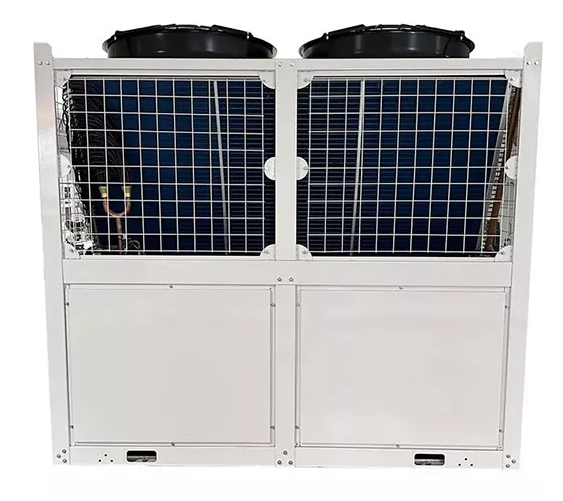
Calculating the spark spread dictates your baseline financial viability. The spark spread represents the ratio between local electricity prices and natural gas prices. A lower ratio heavily favors electrification. You must also factor in external financial levers. Calculate potential carbon tax offsets based on regional regulations. Look for local government incentives targeting industrial decarbonization. Build projected ROI timelines incorporating these variables to present a compelling business case to stakeholders.
Financial Feasibility Indicators
Indicator Name | Definition & Application | Favorable Condition |
|---|---|---|
Spark Spread Ratio | Ratio of electricity cost per kWh to natural gas cost per kWh. | Ratio below 3:1 |
Waste Heat Baseline | Continuous availability of secondary process heat (e.g., cooling water). | Source temp > 30°C |
Carbon Tax Exposure | Projected financial penalty for continued fossil fuel emissions. | High regional carbon pricing |
Equipment Rebates | Government or utility grants for installing energy-efficient systems. | Offsets > 20% of Capex |
When assessing a 90°C air source heat pump, you must compare ambient air viability against industrial waste water. Ambient air provides endless availability but suffers from severe seasonal temperature fluctuations. Winter temperatures drastically reduce heating capacity. Air-source units also require periodic defrost cycles. Defrosting consumes energy and temporarily pauses heat production. Conversely, water-sourced systems utilizing industrial effluent offer stable, year-round source temperatures. This stability guarantees consistent thermal output but requires proximity to reliable liquid waste streams.
Evaluating refrigerants requires balancing efficiency, safety, and compliance. Synthetic refrigerants like HFOs offer ultra-low Global Warming Potential (GWP) and excellent high-temperature stability. However, natural refrigerants dominate heavy industry. Ammonia (NH3) provides exceptional efficiency but carries strict toxicity safety regulations. CO2 excels in applications requiring high temperature glides but operates at extreme pressures. Hydrocarbons offer great thermodynamics but present high flammability risks. You must select a refrigerant compliant with local environmental laws while matching your specific safety infrastructure.
Understanding the inverse relationship between temperature lift and real-world efficiency is critical. Temperature lift defines the difference between your heat source and your final target temperature. Pumping heat from a 10°C ambient source to 90°C creates a massive 80-degree lift. High lifts force compressors to work harder, severely degrading the COP. Shrinking this gap by utilizing a warmer 40°C source waste stream reduces the lift to 50 degrees. A smaller lift directly translates to lower electrical consumption and robust system efficiency.
Source Type Comparison Chart
System Type | Primary Advantage | Key Limitation | Ideal Use Case |
|---|---|---|---|
Ambient Air Source | Universal availability; easy retrofit | Defrost cycles; poor winter COP | Facilities lacking waste water streams |
Waste Water Source | Stable, high COP year-round | Requires consistent liquid waste flow | Food processing, chemical plants |
Exhaust Air Source | Recovers lost ventilation heat | Requires complex ducting integration | Drying operations, large manufacturing |
Evaluating an industrial hot water heat pump involves deeply analyzing how well it integrates into existing thermal grids. You cannot simply drop these machines in place of a gas boiler. You must utilize Pinch analysis. This engineering method balances plant-wide heating and cooling loads simultaneously. It maps all hot and cold process streams to find maximum energy recovery points. Integrating the unit properly means utilizing the cold side to provide free process cooling while generating hot water. This dual-duty integration drastically improves project economics.
Basic steps for executing a thermal integration review:
Map all existing facility heating and cooling demands accurately.
Identify the process Pinch point to separate heat sinks from heat sources.
Calculate the recoverable waste heat available below the Pinch point.
Size the equipment to transfer recovered heat above the Pinch point.
Design buffer storage to decouple heating generation from batch process demands.
You must decide between centralized high-capacity units and decentralized modular units. Centralized systems consolidate maintenance but require extensive piping networks. Long piping runs suffer from significant thermal distribution losses. Decentralized, modular units sit directly adjacent to specific process nodes. Placing units near the point of use minimizes pipe heat loss. Modular setups also offer superior scalability. You can add extra modules seamlessly as plant production capacity expands over time.
Examining compressor types ensures continuous, heavy-duty industrial reliability. High compression ratios demand specific mechanical designs. Screw compressors remain the industry standard for robust, continuous industrial cycles. They handle high lifts and variable loads brilliantly. Centrifugal compressors suit massive centralized systems requiring enormous flow rates. Scroll compressors often power smaller, decentralized modular units. Selecting the correct compressor architecture prevents premature mechanical failure and ensures stable thermal delivery across multiple operating shifts.
Assessing peak electrical load increases is your most urgent infrastructure task. Replacing a 5MW gas boiler with electric heating requires massive amperage. Your current facility switchgear will likely fail to support this sudden electrical demand. You must factor in the immense cost of new transformers and upgraded site cabling. Transformer procurement lead times frequently exceed 50 weeks globally. Failing to secure grid capacity early will derail your entire project schedule and delay deployment.
Addressing physical size constraints poses a major retrofit challenge. Industrial units are physically massive compared to compact gas boilers. They require substantial clearance for safe maintenance access. Furthermore, these systems require large thermal storage buffer tanks. Buffer tanks absorb sudden load spikes and prevent the compressor from short-cycling. You must secure adequate indoor floor space or reinforce outdoor structural pads to support the immense operating weight of water-filled tanks and heavy compressors.
Planning hybrid systems guarantees zero disruption to continuous manufacturing lines. Bivalent setups offer the safest transition pathway. In a bivalent setup, your existing gas boilers remain fully connected to the thermal grid. They act as peaking or backup units. The new electrical equipment handles the base thermal load efficiently. If extreme weather drops ambient temperatures, or if electrical grids fail, the gas boiler automatically ignites. This hybrid redundancy eliminates downtime risks and eases stakeholder anxiety during the transition.
Common Infrastructure Bottlenecks to Watch:
Inadequate transformer capacity or local grid limitations.
Insufficient ceiling height for vertical thermal buffer tanks.
Lack of reinforced flooring to support heavy compressor skids.
Undersized existing water pipes unable to handle new flow rates.
Specifying a reliable custom industrial heat pump system requires verifiable performance data. Do not accept theoretical laboratory COP values. Lab conditions never reflect dirty, variable industrial environments. Require vendors to provide comprehensive case studies from similar manufacturing sectors. Ask for real-world data logs showing performance during peak winter conditions or partial load scenarios. Vendors lacking proven installations in heavy industry present a high technical risk to your facility.
Moving beyond upfront Capex requires you to evaluate lifecycle operational and maintenance costs carefully. You must assess refrigerant phase-out risks accurately. Choosing a refrigerant facing imminent regulatory bans forces expensive future retrofits. Calculate long-term energy savings by plotting projected electricity and gas prices over a 15-year horizon. Factoring in routine maintenance costs, compressor overhauls, and energy consumption provides a realistic picture of your long-term financial commitment.
Evaluating vendor service capabilities ensures long-term uptime. High-temperature compressors operate under extreme mechanical stress. They require specialized replacement parts. You must verify local spare parts availability and guaranteed delivery times. Prioritize vendors offering advanced predictive maintenance. Remote monitoring allows engineers to detect abnormal vibration or pressure drops before catastrophic failure occurs. Robust Service Level Agreements protect your investment and keep your manufacturing lines running seamlessly.
Transitioning to electrified high-temperature heating is a complex engineering project. It requires looking far beyond simple unit specifications. You must evaluate facility-wide thermal flows, map waste heat, and verify infrastructure readiness before disconnecting legacy boilers. Treating this upgrade as a holistic thermal grid optimization guarantees superior efficiency and operational stability.
Next Steps for Implementation:
Conduct a comprehensive thermal energy audit to map existing heating and cooling loads.
Identify and quantify all low-grade waste heat sources across your facility.
Engage local utility providers immediately to assess electrical grid expansion timelines.
Consult specialized engineering firms to perform a Pinch analysis before engaging equipment vendors.
A: Realistic COP varies heavily based on your source temperature. Utilizing a 40°C industrial waste heat source will yield a significantly higher COP (often between 3.0 and 4.0) than utilizing cold ambient winter air. Smaller temperature lifts directly create better efficiency.
A: While these systems excel at hot water generation up to 120°C, producing high-pressure steam requires specific mechanical vapor recompression (MVR) or high-temp cascading systems. For many plants, installing hybrid systems remains the most practical initial step before full steam replacement.
A: Strict regulations are forcing the rapid phase-down of high-GWP synthetic refrigerants. Evaluating natural refrigerants (like Ammonia or CO2) or ultra-low GWP HFOs is critical today. Choosing compliant refrigerants avoids massive future compliance penalties and forced equipment retrofits down the line.


