Please Choose Your Language


Views: 0 Author: Site Editor Publish Time: 2026-09-28 Origin: Site


Industrial facilities face heavy regulatory pressure to decarbonize. Yet, altering mission-critical thermal infrastructure carries massive operational risks. A heat pump boiler replacement is never a simple equipment swap. Fossil-fuel boilers and heat pumps operate on fundamentally different thermodynamic principles. They differ vastly in temperature generation capabilities, flow rate dynamics, and their reliance on a low-grade heat source.
You cannot simply pipe a new compressor into an old steam header and expect production to continue uninterrupted. Facilities need a rigorous, engineering-led evaluation framework. This process determines if a plant is technically ready for an upgrade. A proper assessment protects production uptime while transitioning away from combustion heating. We will walk through the exact parameters required to assess your facility's readiness for thermal electrification, ensuring you avoid costly downtime and mismatched equipment.
Temperature limits dictate feasibility: Current high temperature heat pump technology excels in providing industrial hot water and low-pressure steam, but requires careful matching to specific factory process heating demands.
Waste heat is the primary catalyst: The economic viability of a heat pump boiler replacement hinges on identifying and capturing low-grade waste heat (e.g., cooling towers, effluent, exhaust) within the facility.
Electrical infrastructure upgrades are often mandatory: Shifting from gas or oil to electrical heating requires a comprehensive audit of current grid capacity, transformers, and switchgear.
Hybrid approaches mitigate risk: Retaining existing boilers for peak load management and redundancy is often the most pragmatic step for initial decarbonization efforts.
Commissioning is as critical as design: A successful retrofit requires strict start-up protocols, including full-capacity load testing and refrigerant validation, to ensure seamless handover.
Understanding the thermodynamic needs of your facility is the first step in any retrofit. Manufacturing relies heavily on specific types of heat transfer. You must define the difference between sensible heat and latent heat requirements within your operations. Sensible heat changes the temperature of a fluid without changing its phase. Latent heat involves a phase change, such as boiling water into steam. Traditional boilers excel at providing latent heat, delivering massive amounts of energy rapidly through steam condensation. Heat pumps are generally more efficient at providing sensible heat.
You must map the exact temperature, pressure, and thermal load profiles of your current system. This involves installing clamp-on ultrasonic flow meters and temperature sensors on your existing headers. Logging this data over several months captures peak loads, baseline demands, and seasonal variations. Relying on boiler nameplate capacity often leads to massively oversized replacement equipment because legacy boilers were frequently specified with large safety margins. Factory process heating requires precision. You need to know the exact megawatt-hour (MWh) consumption at specific temperature bands.
Auditing the factory's thermal envelope and existing pipe insulation is mandatory. Legacy steam systems often tolerate poor insulation because the heat source is abundant and high-temperature. Lower delivery temperatures from heat pumps require minimized heat loss across the distribution network. Degraded pipe lagging must be replaced to maintain the required process temperatures at the point of use. If you send 90°C water down a poorly insulated 100-meter pipe run, it will not arrive at the required temperature for your process.
Technological advancements have drastically expanded thermal capabilities. A modern high temperature heat pump can achieve delivery temperatures up to 160°C to 200°C. This is accomplished using advanced refrigerants and multi-stage compressor configurations. Cascade systems, which use two different refrigerant circuits stacked together, capture low-grade waste heat in the first stage and elevate it to usable process temperatures in the second stage.
Despite these advancements, limitations remain regarding direct high-pressure steam generation. Traditional combustion boilers easily generate steam at 10 bar or higher. Heat pumps face physical and chemical limits based on the critical point of their refrigerants. Pushing a compressor to generate high-pressure steam directly often results in severe efficiency penalties and increased mechanical wear on the screw or reciprocating compressors.
Deciding between maintaining a steam network or converting to hot water dictates the complexity of the project. A direct steam heat pump replacement often requires mechanical vapor recompression (MVR) or specialized steam-generating heat pumps. This involves flashing hot water into low-pressure steam and then mechanically compressing it to the required process pressure. This adds significant mechanical complexity, requires specialized high-speed centrifugal compressors, and demands heavy electrical infrastructure.
Conversely, transitioning to an industrial hot water system simplifies the engineering. Many food and beverage, textile, and chemical processes currently using steam can actually operate on pressurized hot water at 90°C to 120°C. Lowering process temperatures where feasible yields massive efficiency gains. It reduces thermal stress on the distribution network and allows the heat pump to operate at a much higher Coefficient of Performance (COP).
Comparison: Retaining Steam vs. Converting to Hot Water | ||
Parameter | Steam Network Retrofit (MVR) | Industrial Hot Water Conversion |
|---|---|---|
Mechanical Complexity | High (Requires compressors and flash tanks) | Medium (Requires new heat exchangers and pumps) |
Typical Delivery Temperature | 120°C - 200°C+ | 80°C - 120°C |
System Efficiency (COP) | Lower (Typically 1.5 - 2.5) | Higher (Typically 3.0 - 5.0) |
Distribution Heat Loss | High (Requires heavy insulation) | Moderate (Easier to manage) |
Maintenance Requirements | Intensive (High-speed rotating equipment) | Standard (Standard pumps and valves) |
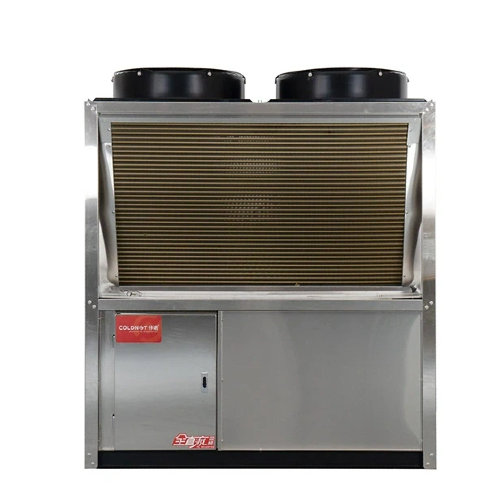
Executing an industrial heat pump retrofit requires methodical site assessment. The following five-point checklist ensures all technical prerequisites are met before equipment procurement begins. Skipping any of these steps will result in system underperformance or complete operational failure.
The core metric of heat pump efficiency is the temperature lift. This is defined as the difference between the waste heat source temperature and the required process delivery temperature. If you have waste water at 30°C and need process water at 80°C, your lift is 50 Kelvin.
There is a strict inverse relationship between temperature lift and the Coefficient of Performance (COP). Smaller lifts yield higher efficiencies. A lift of 30K might yield a COP of 5.0, while a lift of 80K might drop the COP to 2.0. Evaluating this lift determines if the project makes thermodynamic sense. You must accurately measure the lowest expected source temperature against the highest required sink temperature. If the required lift exceeds the capability of a single-stage compressor, you must engineer a two-stage or cascade system.
Typical COP Variations Based on Temperature Lift (Ammonia Refrigerant) | |||
Source Temperature (°C) | Sink Temperature (°C) | Temperature Lift (K) | Estimated COP |
|---|---|---|---|
40 | 70 | 30 | 5.2 |
30 | 80 | 50 | 3.8 |
20 | 90 | 70 | 2.6 |
Heat pumps do not create heat; they move and upgrade it. You must identify a reliable, continuous source of low-grade heat. Conducting a thermal pinch analysis is the standard engineering method for this. Pinch analysis maps all heating and cooling streams within a facility to identify simultaneous demands. You plot composite curves to find the exact pinch point where heat recovery is most effective.
The goal is to find waste heat that is currently being rejected to the atmosphere and redirect it into the heat pump evaporator. You will need to install plate-and-frame heat exchangers to isolate dirty waste streams from the clean evaporator loop. Common industrial heat sources include:
Cooling water circuits from injection molding or extrusion lines.
Refrigeration condenser heat from cold storage facilities.
Warm wastewater effluent from cleaning or pasteurization processes.
Exhaust air from drying ovens or ventilation systems.
Compressor cooling oil loops.
Replacing a fossil-fuel boiler with electric compressors drastically changes a facility's energy profile. You are shifting massive thermal loads onto your electrical infrastructure. Assess your current electrical capacity against the new megawatt (MW) load of the compressors. A 3 MW thermal output heat pump operating at a COP of 3.0 requires 1 MW of continuous electrical power.
Review the main incoming supply, transformer ratings, and switchgear capacity. Industrial compressors require significant starting currents. You must specify Variable Frequency Drives (VFDs) or soft starters to manage inrush current and prevent voltage drops across the plant. You must determine if substation upgrades are necessary. Upgrading high-voltage infrastructure involves long lead times and significant capital expenditure, which must be factored into the project timeline.
Physical space is often a severely underestimated constraint. Compare the physical footprint of high-capacity heat pumps, buffer cylinders, and associated thermal storage tanks against compact gas boilers. A 2 MW gas boiler might fit in a small corner; a 2 MW heat pump system, complete with source heat exchangers and thermal storage, requires substantially more floor space.
Structural considerations are critical for roof-mounted or mezzanine-level installations. Compressors generate vibration, requiring heavy-duty inertia bases and spring isolation mounts. Large buffer tanks filled with water test the weight-bearing limits of existing concrete slabs. Furthermore, legacy boiler rooms require hazardous materials audits. Asbestos checks on old pipe lagging, gaskets, and boiler casings must be completed and cleared prior to demolition and installation week.
A successful retrofit replaces an entire thermal ecosystem, not just a single box. Detail the ancillary equipment required beyond the heat pump itself. You cannot reuse old steam traps or condensate return pumps for a pressurized hot water system. You will likely need:
Upgraded heat exchangers designed for closer temperature approaches.
Large-volume buffer tanks with internal stratification sparge pipes to prevent compressor short-cycling.
Variable speed pumps to manage precise flow rates across the condenser and evaporator.
Advanced sensor arrays for real-time temperature and pressure monitoring.
New pipework and headers sized for the specific mass flow requirements of hot water rather than steam.
Three-way mixing valves for precise temperature control at the process level.
Expansion vessels sized for the new total system volume.
Electrifying industrial heat requires a clear understanding of capital expenditure (CAPEX) versus operational expenditure (OPEX). Upfront costs are inherently higher than replacing a gas boiler like-for-like. The initial investment includes the heat pump equipment, electrical substation upgrades, extensive piping integration, and thermal storage tanks. You are building a miniature utility plant inside your factory.
The financial justification relies entirely on long-term OPEX reductions. These savings are generated by drastically reducing fossil fuel consumption and maximizing the COP. When a system operates at a COP of 4.0, it delivers four units of heat for every one unit of electrical energy consumed. This multiplier effect is the primary driver of operational savings over the equipment's lifecycle. Maintenance schedules also shift from boiler tube cleaning and burner tuning to compressor oil sampling and vibration analysis.
The financial return on investment is heavily dictated by the spark spread. This is the ratio of electricity prices to natural gas prices in your specific region. If electricity is highly expensive and natural gas is cheap, the spark spread is wide, making electrification financially challenging.
To achieve OPEX parity or generate savings, the heat pump's COP must overcome this price ratio. For example, if electricity costs three times as much as natural gas per kilowatt-hour, your system requires a COP of 3.0 just to break even on energy running costs. A COP higher than 3.0 begins to generate actual financial savings. Facilities must model their expected COP against local utility rates and forecast future energy cost volatility. Installing sub-metering helps track these metrics accurately post-installation.
Beyond raw energy costs, regulatory frameworks heavily influence the overall financial viability of these projects. Carbon taxes and emissions caps penalize continued fossil fuel use, effectively increasing the future cost of operating legacy boilers. Phasing out high-GWP (Global Warming Potential) refrigerants also means you must select equipment using natural refrigerants like ammonia or CO2 to future-proof the installation.
Government grants, tax rebates, and green energy subsidies for electrification can offset a significant portion of the initial CAPEX. Factoring in these financial incentives, alongside the avoidance of future carbon penalties, fundamentally alters the long-term economic calculation. Facilities must consult with energy policy experts to capture all available funding mechanisms before finalizing project budgets.
Industrial facilities cannot halt production for weeks to accommodate a boiler room overhaul. Managing downtime requires meticulous planning. Strategies for phased installations are essential. Utilize scheduled maintenance turnarounds or annual plant shutdowns for critical tie-ins.
The most effective strategy is building parallel piping networks. Install the new heat pump, buffer tanks, and electrical infrastructure alongside the existing operational boiler. Complete all primary piping, sensor wiring, and software integration offline. Use hot tapping techniques if necessary to install new branches on live headers. The final tie-in to the main process headers can then be executed during a brief, scheduled weekend outage, minimizing production disruption.
Commissioning is the most critical phase of the project. A structured handover prevents catastrophic equipment failure on day one. Start-up protocols must be strictly enforced. This includes pre-heating compressor oil, often required for 6 to 8 hours prior to the initial start. This boils off any dissolved refrigerant in the oil sump, ensuring proper lubrication.
Technicians must pressure test the system with dry nitrogen, then pull a deep vacuum to 500 microns and hold it for 24 hours. This ensures the circuit is completely free of water, air, and non-condensable gases. Moisture in a refrigerant circuit causes acid formation and compressor burnout. Mandate full-capacity load testing using temporary load banks if the factory is not running at peak. Static pressure tests across the industrial hot water system verify flow rates and thermal stability. The system must run at full load for sustained periods to prove it can handle actual factory demands before full production integration.
Complete boiler removal is not always the best initial step. The hybrid system approach, or bivalent operation, mitigates operational risk. Keep the existing boiler as a peaking plant or backup unit. The heat pump handles 80% to 90% of the baseline annual heating load. The legacy boiler fires only to handle extreme winter loads or sudden process spikes.
This approach reduces the required CAPEX, as the heat pump does not need to be oversized for rare peak events. Upgrading industrial control systems (SCADA/BMS) is vital here. The control system uses a PID loop to optimize the automated switchover between the heat pump and the boiler based on real-time energy pricing, ambient temperatures, and immediate factory demand.
The success of the retrofit depends heavily on vendor selection. Vetting an industrial heat pump supplier requires strict criteria. Look for a proven track record in your specific manufacturing sector. A supplier experienced in commercial HVAC may not understand the rapid load fluctuations and harsh environments of a chemical processing plant.
Demand availability of performance guarantees tied to specific COP metrics and delivery temperatures. Require a Factory Acceptance Test (FAT) before the equipment ships. Robust post-installation commissioning support is non-negotiable. Select a partner capable of full-system integration, not just equipment delivery. They must understand fluid dynamics, heat exchanger sizing, and control logic to ensure the compressor works in harmony with your factory.
Install ultrasonic flow meters and data loggers on existing steam and hot water headers to capture exact thermal load profiles over a 30-day period.
Hire a specialized engineering firm to conduct a formal pinch analysis, identifying all viable waste heat streams and simultaneous heating/cooling demands.
Audit your facility's electrical switchgear and transformer capacity to determine if the grid can support the new megawatt load of industrial compressors.
Draft a bivalent control sequence detailing exactly how the new heat pump will integrate with the existing boiler for peak load management.
A: Current commercial limits for high temperature heat pumps typically reach up to 160°C to 200°C. The exact maximum temperature depends heavily on the specific refrigerant used (such as advanced HFOs or natural refrigerants) and the compressor technology deployed in the system.
A: While low-pressure steam generation is possible, completely replacing a high-pressure steam boiler is complex. High-pressure steam often requires mechanical vapor recompression (MVR) or hybrid systems. Many facilities find it more efficient to convert their processes to pressurized hot water instead.
A: The ROI typically ranges from 3 to 7 years. This timeframe is heavily dependent on the local spark spread (electricity vs. gas prices), the availability of continuous waste heat, and access to government decarbonization incentives and grants.
A: Integration requires the use of large-volume buffer tanks, specialized heat exchangers, and parallel piping networks. This setup ensures stable flow rates and consistent delivery temperatures, allowing the new system to tie into the existing headers without disrupting ongoing manufacturing processes.
A: Critical start-up steps include pre-heating compressor oil for 6-8 hours, conducting static pressure testing, and running the unit at full capacity for sustained periods. Technicians must also verify pipe insulation integrity and confirm absolute refrigerant purity before final handover.
A: Highlight the need for bespoke engineering capabilities rather than off-the-shelf sales. Look for proven experience with industrial-scale refrigerants like ammonia or CO2, a strong track record in your specific industry, and robust, documented commissioning protocols.


