Please Choose Your Language


Views: 0 Author: Site Editor Publish Time: 2026-02-05 Origin: Site


Property owners and facility managers face constant pressure to reduce operational expenditures (OpEx). They must also enhance building performance and meet increasingly stringent sustainability mandates. These challenges demand innovative solutions that go beyond incremental improvements. Water source heat pumps (WSHPs) represent a strategic technology designed to address these pressures head-on. They leverage the remarkable thermal stability of water to deliver superior efficiency and reliability. This guide moves beyond a simple list to provide a clear-eyed evaluation framework. It details the 10 primary benefits of WSHPs through the lens of total cost of ownership, operational reliability, and long-term asset value for commercial and multi-family properties. You will learn how this technology can transform your building's energy profile and financial performance.
Superior TCO: While initial CapEx can be higher, WSHPs typically reduce energy costs by 30-50% and have a longer operational lifespan (20-25 years), leading to a lower total cost of ownership.
Energy Recovery: The primary benefit for multi-zone commercial buildings is the ability to perform simultaneous heating and cooling, recovering and transferring heat from one zone to another, drastically improving system efficiency.
Operational Reliability: Performance is independent of extreme outside air temperatures, ensuring consistent capacity and comfort during peak winter and summer conditions, unlike air-source alternatives.
Site-Dependent Feasibility: The most significant implementation factor is the availability of a suitable water source (groundwater, surface water, or ground loop), requiring expert site assessment and design.
For any significant capital project, the financial case must be undeniable. Water Source Heat Pumps excel by delivering a compelling return on investment driven by a lower total cost of ownership (TCO). This advantage stems from four interconnected benefits: unparalleled efficiency, direct operational savings, exceptional durability, and simplified maintenance.
The core principle behind a WSHP’s efficiency is fundamental physics. Water is a vastly superior medium for thermal transfer compared to air. Its thermal conductivity is hundreds of times more effective, meaning it can absorb and release heat with far less energy. This allows WSHPs to achieve exceptionally high Coefficient of Performance (COP) and Energy Efficiency Ratio (EER) ratings. A COP rating measures heating efficiency, and a high rating (often 4.0 to 6.0 for WSHPs) means the system produces 4 to 6 units of heat for every single unit of electricity consumed. Similarly, a high EER indicates superior cooling efficiency. These performance metrics frequently exceed the minimum standards set by frameworks like ASHRAE 90.1, the benchmark energy standard for commercial buildings.
High efficiency translates directly into tangible financial gains. The most immediate impact is a dramatic reduction in monthly utility bills. Commercial properties switching from traditional boiler and chiller systems often report energy savings between 30% and 50%. This isn't just about using less energy; it's also about using it more intelligently. Because WSHPs operate with stable, moderate energy draws rather than the sharp peaks associated with conventional air conditioners, they also help lower peak electrical demand charges. For large facilities, these demand charges can constitute a significant portion of an electricity bill, making this reduction a powerful secondary source of savings.
A key but often overlooked aspect of TCO is asset longevity. Conventional HVAC systems, with outdoor units exposed to rain, snow, salt, and extreme temperatures, experience significant wear and tear. Their typical lifespan is often in the 10-15 year range. In contrast, the primary components of a WSHP system—the individual heat pump units—are located indoors. Shielded from the elements, they are protected from environmental degradation. This protection, combined with a more stable operating cycle, results in a typical system lifespan of 20 to 25 years. This extended durability not only improves the return on investment but also simplifies long-term capital planning by pushing major replacement costs further into the future.
Complexity often breeds cost. Central boiler and chiller plants involve a wide array of complex mechanical parts, including large pumps, fans, and combustion equipment, each requiring specialized service. WSHP systems decentralize this complexity. Each zone has a self-contained unit with fewer moving parts. There is no large, central plant to maintain. Maintenance routines are simplified and more predictable, typically involving regular filter changes, drain pan checks, and periodic inspections of the water loop's condition. This streamlined process reduces the frequency and cost of annual service contracts, contributing further to lower operational expenditures.
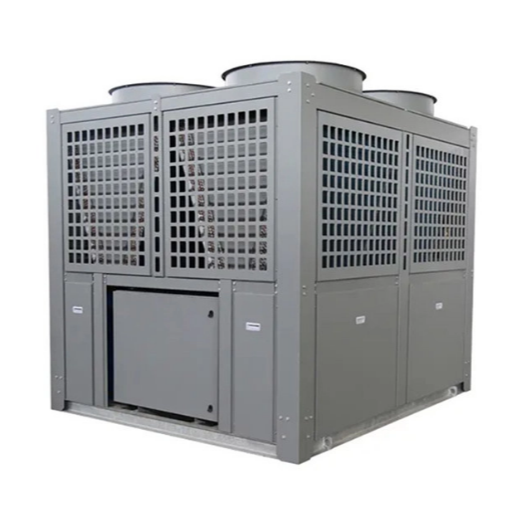
Beyond the balance sheet, a building's HVAC system is judged by its ability to provide consistent, reliable comfort to its occupants. In this domain, water source heat pumps offer distinct performance advantages that air-based systems cannot match, leading to higher tenant satisfaction and a more pleasant indoor environment.
Air-source heat pumps have a fundamental weakness: their performance is directly tied to the outdoor air temperature. As temperatures plummet in winter, there is less heat in the air to extract, causing their efficiency and heating capacity to drop significantly. Conversely, during a scorching heatwave, it becomes harder for them to reject heat into the already hot air. WSHPs completely bypass this issue. They exchange heat with a water loop that is maintained within a stable temperature range, typically between 60°F and 95°F (15°C to 35°C). This stable source temperature means the system's performance is immune to extreme outdoor weather, delivering consistent heating and cooling capacity year-round.
This is arguably the most powerful benefit for multi-zone commercial buildings like offices, hotels, or mixed-use developments. In these environments, it's common for one side of the building (e.g., the sunny west-facing side) to require cooling while another side (the shaded north-facing side) requires heating at the same time. In a traditional system, this would involve a chiller and a boiler working against each other—an incredibly inefficient process. A WSHP system turns this into an opportunity for massive energy savings. The units in cooling mode reject their captured heat into the common water loop. This "waste" heat is then immediately absorbed and used by the units in heating mode. This elegant energy transfer dramatically reduces the load on the central cooling tower and boiler, maximizing system efficiency. This principle is especially effective in High-Temperature Water Source Heat Pump applications designed for robust heating needs.
Noise is a critical factor in occupant comfort, particularly in sensitive environments like hospitals, libraries, hotels, and multi-family residences. Conventional systems often rely on noisy outdoor condenser units with large fans that can be a source of constant disturbance. WSHPs eliminate this problem. The loudest component, the compressor, is housed inside each individual unit, which is typically enclosed in an acoustically treated cabinet and located away from occupied spaces in a service closet or ceiling plenum. The absence of outdoor fan units creates a quieter exterior environment and a more peaceful and productive interior, directly enhancing the occupant experience.
Modern building management extends beyond cost and comfort to include environmental, social, and governance (ESG) responsibilities. Water source heat pumps are inherently aligned with these goals, helping properties minimize their environmental impact, improve health and safety, and future-proof their assets against tightening regulations.
At its core, a WSHP is a renewable energy technology. By exchanging heat with the earth (in geothermal applications) or a body of water, it harnesses the planet's natural, stable thermal energy. This process is a key part of the move toward building electrification. Because WSHPs eliminate the need for on-site fossil fuel combustion (like natural gas boilers), they directly reduce a building's greenhouse gas emissions. This makes them an ideal solution for organizations committed to decarbonization and achieving specific sustainability targets, such as LEED certification or net-zero energy goals.
The health and well-being of occupants is a paramount concern. On-site fuel combustion always carries a risk, however small, of introducing harmful byproducts like carbon monoxide (CO), nitrogen oxides (NOx), and other particulates into the building's air supply. By operating entirely on electricity, WSHPs eliminate this risk entirely. This fundamental design difference contributes to healthier indoor air quality, providing peace of mind for both managers and occupants. It simplifies compliance with indoor air quality standards and removes a potential source of liability.
The regulatory landscape for building energy use and emissions is only moving in one direction: stricter standards. Cities and states across the globe are implementing more stringent energy codes and, in some cases, outright banning new natural gas connections for buildings. Investing in a conventional fossil fuel-based HVAC system today could mean facing costly mandatory retrofits in the near future. Adopting WSHP technology is a proactive strategy. It aligns a building with the future of energy policy, positioning it as a high-performance, sustainable asset. This not only ensures long-term compliance but also protects and enhances the property's market value.
While the benefits are compelling, a WSHP system is not a one-size-fits-all solution. A successful implementation requires a clear-eyed evaluation of the upfront investment, site-specific conditions, and the need for specialized expertise. Understanding these trade-offs is crucial for making an informed decision.
The most significant hurdle for many projects is the initial capital expenditure. The upfront cost for a WSHP system, particularly a closed-loop geothermal system that requires extensive drilling or excavation, is typically higher than for conventional boiler/chiller or rooftop unit installations. However, this cost must be viewed through the lens of Total Cost of Ownership (TCO). The higher CapEx is an investment that pays dividends through decades of lower OpEx. The financial modeling for a project should always compare the upfront cost against the projected lifetime savings in energy and maintenance.
The success of a WSHP project is fundamentally tied to its location. A thorough feasibility study is a non-negotiable first step.
Open-Loop Systems: These systems rely on a source like a well, lake, or river. The study must confirm not only adequate water volume but also acceptable water quality to prevent corrosion and scaling. It also requires navigating local regulations regarding water extraction and discharge.
Closed-Loop Systems: These require sufficient land area for a geothermal field, whether horizontal trenches or vertical boreholes. The site's geology will determine the drilling cost and the required loop field size.
If a viable water or ground source is not available, a WSHP system may not be the right choice.
A WSHP system is not a plug-and-play product; it is an engineered solution. The remarkable efficiency benefits are only realized if the system is designed and installed correctly. This requires expertise in several areas:
Accurate Load Calculations: Under-sizing or over-sizing the system will compromise both comfort and efficiency.
Proper Loop Design: The ground or water loop must be precisely matched to the building's aggregate heating and cooling loads.
Hydraulic Balancing: Ensuring proper water flow to every unit in the building is critical for performance and reliability.
Partnering with an experienced engineering firm and qualified installers is essential to avoid costly mistakes and ensure the system delivers on its promises.
For existing buildings, WSHPs can be an excellent upgrade path, especially for properties looking to replace aging two-pipe or four-pipe hydronic systems. In many multi-story buildings, the existing vertical pipe risers can be reused, significantly reducing the cost and disruption of the retrofit. However, a comprehensive audit of the existing infrastructure is mandatory. This audit must verify the condition and capacity of the existing piping, pumping systems, and electrical infrastructure before proceeding with the project.
| Consideration | Key Trade-Off | Best Practice |
|---|---|---|
| Capital Cost (CapEx) | Higher initial investment vs. Lower lifetime operational cost (OpEx). | Conduct a full Total Cost of Ownership (TCO) analysis over a 20-25 year period. |
| Site Feasibility | System viability is contingent on site conditions (water source, land area). | Commission a professional geological and hydrological feasibility study early in the process. |
| Design & Installation | High performance requires specialized expertise vs. simple equipment swap. | Engage experienced engineers and certified installers with a proven track record in WSHP systems. |
| Retrofit Projects | Potential to reuse existing infrastructure vs. risk of incompatibility. | Perform a thorough audit of existing piping, electrical, and structural systems. |
Water source heat pumps offer more than just an alternative way to heat and cool a building. They represent a long-term strategic investment that transforms energy from a major operational cost into a managed, efficient resource. By delivering superior efficiency, unmatched reliability, and a clear path to sustainability, they provide a powerful solution to the core challenges facing modern property management.
While the 10 benefits outlined here are compelling, the ultimate business case hinges on two critical factors: a favorable total cost of ownership model and a confirmed site feasibility. A high upfront cost is justified only by decades of operational savings and an extended asset lifespan. Therefore, the definitive next step for any interested property owner or facility manager is clear. You should conduct a professional feasibility assessment to analyze your property’s specific conditions and model the potential return on investment for a WSHP system.
A: While site-specific, ROI is driven by local utility rates, system design, and available incentives. It typically falls in the 5-10 year range, with savings accruing over the system's 20+ year life.
A: Both offer zoned control and heat recovery. WSHPs use water, which is safer (no refrigerant in occupied spaces), has no distance limitations on piping, and is often considered simpler to maintain. VRF can be more complex due to extensive refrigerant piping and oil management requirements.
A: Yes. Systems can be configured with a "desuperheater" to capture waste heat and pre-heat domestic hot water, further increasing overall building energy efficiency. This is a common feature in Commercial Heat Pump Water Heater applications.
A: Open-loop systems draw water directly from a source like a well or lake, pass it through the system, and discharge it. They are highly efficient but depend on water quality and local regulations. Closed-loop systems circulate a water/antifreeze solution through a buried pipe network, exchanging heat with the ground. They are more common due to broader site applicability.
A: The central water loop is designed to handle imbalances. A cooling tower adds cooling capacity when the loop gets too warm (summer-dominant buildings), and a high-efficiency boiler adds heat when the loop gets too cool (winter-dominant buildings). The goal of WSHP design is to maximize the time these supplemental systems are off.


