Please Choose Your Language


Views: 0 Author: Site Editor Publish Time: 2026-09-25 Origin: Site


Saltwater pools offer excellent water quality, a softer feel for swimmers, and lower chemical maintenance demands compared to traditional chlorine setups. However, this saline environment aggressively attacks standard pool equipment. Installing a conventional heater in a saltwater pool introduces severe financial risks. Dissimilar metals break down rapidly under these conditions. This chemical reaction leads to premature heat exchanger failure, voided manufacturer warranties, and unexpected operational disruptions. For commercial facilities, a closed pool directly impacts guest satisfaction and facility revenue.
To prevent these costly failures, facility managers and homeowners must approach equipment selection with strict technical scrutiny. Standard heating solutions cannot survive continuous exposure to salt and localized chlorine gas. Buyers need a reliable evaluation framework to assess material durability, thermal efficiency, advanced technology integration, and accurate sizing requirements. By prioritizing engineering quality over the initial purchase price, operators secure long-term reliability and maximize the return on investment for their aquatic facilities.
Material Grade is Non-Negotiable: Pure titanium heat exchangers are the only viable standard for saltwater applications; cupro-nickel or standard copper will rapidly degrade due to galvanic corrosion.
Efficiency vs. Climate Reality: Coefficient of Performance (COP) dictates operating costs, but buyers must evaluate COP based on their specific local ambient air temperatures, not just laboratory maximums.
Commercial Scalability & Acoustics: Hotel resort pool heating requires precise BTU calculations factoring in surface area and wind exposure, alongside noise-reduction technologies (inverter compressors) to maintain guest comfort.
Supplier Vetting: Selecting a pool heat pump supplier requires scrutinizing warranty fine print specifically regarding salt parts-per-million (PPM) limits, coastal environment clauses, and local service networks.
Saltwater acts as a highly effective electrolyte, creating an environment where galvanic corrosion thrives. When two dissimilar metals come into contact within this conductive saline solution, a microscopic electrical current is generated. This battery effect causes the less noble metal to act as an anode, corroding at an accelerated rate to protect the more noble metal. In standard pool heaters utilizing copper or cupro-nickel heat exchangers, the saline pool water aggressively attacks the metal tubing. Over a short period, this chemical reaction strips away the material. Field technicians frequently observe green copper staining on pool plaster, which is a direct indicator that the internal heat exchanger is dissolving into the water. This leads to pinhole leaks, internal flooding of the refrigerant lines, and catastrophic compressor failure. Equipment designed for freshwater lacks the metallurgical defense required to survive this continuous electrochemical assault.
The physical placement of equipment on the plumbing pad introduces another layer of chemical stress. Saltwater pools rely on a chlorine generator cell to convert dissolved salt into active chlorine. The water exiting this salt cell contains extremely high, localized concentrations of chlorine gas and saline. If a heater is not engineered to withstand this aggressive chemical mixture, the internal components will degrade rapidly. Even when plumbed correctly upstream of the chlorinator, trace amounts of concentrated gas can migrate backward through the pipes when the primary circulation pump shuts off. Specialized heating equipment incorporates chemically inert materials and specific flow dynamics to mitigate the risks associated with this harsh chemical proximity.
Deploying non-rated heating equipment in a saline pool guarantees premature failure. A standard heater that might reliably operate for over a decade in a traditional freshwater pool will often fail within three years when exposed to saltwater. This rapid degradation forces owners into a cycle of expensive repairs and full unit replacements. Replacing a flooded compressor and a corroded heat exchanger often costs as much as a brand-new unit. Furthermore, manufacturers easily identify galvanic corrosion signatures. When a technician inspects a failed copper heat exchanger and identifies salt-induced degradation, the warranty claim is immediately denied. The initial savings of purchasing a standard heater are quickly erased by the compounding costs of replacement parts, labor, and extended facility downtime.
The heat exchanger is the heart of any pool heating system, and pure titanium is the absolute industry standard for a saltwater pool heat pump. Titanium possesses exceptional chemical inertness, making it virtually immune to the galvanic corrosion that destroys legacy metals. Unlike cupro-nickel, which was once the premium choice for standard pools, titanium does not react with high salt concentrations or aggressive chlorine levels. Cupro-nickel is no longer sufficient for modern saline applications because its copper content remains vulnerable to electrolytic degradation over time.
Beyond the material itself, the physical geometry of the heat exchanger dictates performance. Manufacturers utilize different tubing designs to optimize heat transfer. Rifled or twisted titanium tubing increases the internal surface area, allowing for faster thermal exchange between the hot refrigerant and the pool water. However, buyers must ensure the rifling design does not create narrow choke points where calcium scale can accumulate. A well-engineered titanium exchanger balances maximum surface area with smooth flow dynamics to prevent mineral buildup, ensuring consistent heating efficiency over the unit's lifespan.
Material Type | Corrosion Resistance in Saltwater | Expected Lifespan in Saline Pools | Industry Recommendation |
|---|---|---|---|
Standard Copper | Extremely Low | 1 to 3 Years | Do Not Use |
Cupro-Nickel | Moderate | 3 to 5 Years | Not Recommended for Salt |
Pure Titanium | Extremely High | 10 to 15+ Years | Mandatory Standard |
Thermal efficiency is measured by the Coefficient of Performance (COP), which calculates the ratio of energy output to energy input. A COP of 6.0 means that for every one unit of electrical energy consumed, the heat pump produces six units of thermal energy. While high COP numbers look impressive on marketing brochures, buyers must evaluate these ratings based on realistic operating conditions. Manufacturers often highlight maximum COP ratings achieved in optimal laboratory environments, typically around 80°F (26°C) ambient air temperature with high humidity.
Real-world efficiency requires scrutinizing the COP charts at lower, more practical temperatures. A unit's performance at 50°F (10°C) is a much more accurate indicator of its capability during shoulder seasons or cool coastal nights. High-efficiency units require a larger upfront capital expenditure, but they drastically reduce monthly utility bills. Buyers should calculate the return on investment timeline by comparing the higher initial purchase price against the projected annual energy savings, factoring in local electricity rates and average seasonal temperatures.
Modern heating solutions have moved away from binary on/off operation in favor of full-inverter technology. An inverter compressor utilizes a variable frequency drive to modulate its speed dynamically, drawing only the exact amount of electrical current needed to maintain the target water temperature. This variable-speed operation eliminates the massive power surges associated with traditional single-speed compressors starting up. Consequently, inverter units achieve significantly higher seasonal COP ratings and reduce mechanical wear and tear on internal components.
Smart connectivity is another essential specification. Units equipped with Wi-Fi or Bluetooth modules allow operators to monitor temperatures, adjust settings, and receive diagnostic alerts remotely. For large-scale facilities, seamless integration with existing Building Management Systems (BMS) or centralized pool automation panels is mandatory for efficient facility management. Furthermore, inverter technology drastically lowers operational decibel (dB) levels. By running the compressor and fan at lower speeds during temperature maintenance phases, these units operate quietly. This is a strict requirement for residential backyards and premium hospitality settings where ambient noise must comply with local ordinances.
Heat pumps extract thermal energy from the ambient air, which causes condensation to form on the external evaporator coils. In cooler climates, this condensation freezes, blocking airflow and halting the heating process. Buyers must evaluate the unit's defrost capabilities to ensure uninterrupted operation. Passive defrost systems simply turn off the compressor and leave the fan running, relying on the ambient air to melt the ice. This method fails completely when air temperatures drop near freezing.
For reliable operation in temperate or coastal climates, active hot-gas bypass defrost is required. This system utilizes a reversing valve to temporarily redirect hot refrigerant gas directly into the evaporator coil, melting ice buildup in minutes rather than hours. This active defrost capability allows the unit to continue operating efficiently in low-ambient conditions, ensuring the pool remains warm during cold shoulder-season nights when heat loss is at its highest.
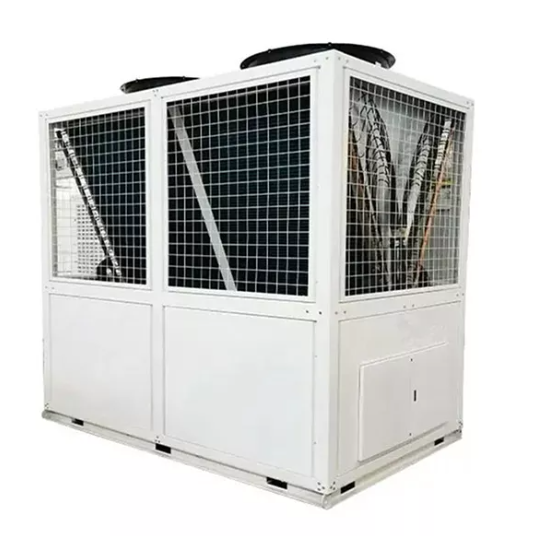
Proper sizing is the most critical step in the procurement process. An undersized unit will run continuously without ever reaching the target temperature, while an oversized unit wastes capital expenditure. Relying solely on pool volume (gallons or liters) is a fundamentally flawed metric. Heat loss occurs primarily at the water's surface through evaporation and radiant transfer, meaning a shallow, expansive pool loses heat much faster than a deep, compact diving well of the same volume.
To accurately size a unit, follow these specific calculation steps:
Measure the exact surface area of the pool in square feet.
Determine the target water temperature required for the facility.
Identify the average ambient air temperature during the coldest month of planned operation.
Calculate the temperature delta by subtracting the ambient air temperature from the target water temperature.
Multiply the surface area by the temperature delta, then multiply by a wind exposure factor (typically 12 for moderate wind) to find the required BTUs per hour.
Wind exposure drastically accelerates surface evaporation, stripping heat from the water. Accurate sizing must account for local wind patterns. To mitigate this wind-induced heat loss, facilities should utilize thermal pool covers during off-hours, which can reduce heating demands by up to 50%. Additionally, the heating equipment itself must feature forced-draft fan systems capable of pulling sufficient air through the evaporator coils even when facing strong prevailing winds.
High-demand aquatic facilities face unique operational challenges that residential pools do not. Commercial environments require rapid temperature recovery times to accommodate heavy bather loads, continuous filtration cycles, and strict health department temperature mandates. A heavy-duty commercial pool heat pump is engineered with robust compressors, larger evaporator coils, and reinforced internal plumbing to handle these relentless operational demands.
For consistent hotel resort pool heating, relying on a single massive heater introduces a single point of failure. The industry best practice is to deploy multiple cascaded units using an N+1 redundancy strategy. By plumbing several units in a parallel manifold configuration, the facility ensures that if one unit requires maintenance or repair, the remaining units carry the thermal load. This cascaded approach guarantees zero downtime, protecting the guest experience and maintaining operational continuity.
Coastal installations present a uniquely hostile environment for mechanical equipment. Salt-laden ambient air aggressively attacks external metal components, particularly the delicate aluminum fins on the evaporator coil and the exposed fan motor housings. Standard residential heaters rust and degrade rapidly when placed near the ocean, leading to restricted airflow and eventual system failure.
When selecting a seaside resort pool heat pump, buyers must mandate specific coastal protection features. The evaporator fins must be factory-treated with a baked-on epoxy or gold-fin anti-corrosion coating. The external cabinetry should be constructed from UV-resistant marine-grade polymer or 316L stainless steel to prevent rust. Furthermore, the internal fan motors must be fully sealed against moisture and salt intrusion. These specialized design elements ensure the equipment maintains its structural integrity and thermal efficiency despite the corrosive coastal atmosphere.
Facility managers must weigh the operational trade-offs between different heating technologies. Gas heaters provide rapid, on-demand heating, capable of raising water temperatures quickly regardless of ambient weather conditions. However, this speed comes at a massive financial cost, as burning natural gas or propane is inherently expensive. In contrast, a swimming pool heat pump operates on a slow and steady heating curve. It takes longer to reach the initial target temperature, but it maintains that temperature with exceptional energy efficiency, often costing 60% to 80% less to operate monthly compared to gas alternatives.
The regulatory landscape for commercial buildings is shifting rapidly away from fossil fuels. Municipalities and state governments are implementing strict decarbonization goals, updating building codes to restrict or outright ban new commercial gas hookups. Heat pumps align perfectly with these sustainability mandates because they do not rely on combustion and produce zero on-site emissions. Transitioning to electric-driven thermal extraction allows facilities to meet eco-friendly operational standards, qualify for green energy rebates, and future-proof their infrastructure against tightening environmental regulations.
For facilities located in regions with extreme temperature fluctuations, a hybrid heating architecture offers the best of both worlds. This setup pairs a high-efficiency heat pump with a traditional gas heater on the same plumbing pad. The heat pump handles the primary baseload saltwater pool heating, maintaining the temperature economically during normal weather conditions. When ambient temperatures plummet and the heat pump's efficiency drops, the automation system seamlessly engages the gas heater via an automated bypass valve to provide rapid thermal recovery. This hybrid approach guarantees consistent water temperatures year-round while minimizing reliance on expensive fossil fuels.
Objective evaluation requires organizing technical data into a structured comparison matrix. Buyers should chart the top shortlisted brands against specific performance metrics rather than relying on marketing claims. Key data points must include the COP rating at 50°F ambient temperature, the specific grade of titanium used in the heat exchanger, the inclusion of full-inverter technology, and the length of the comprehensive warranty. This matrix allows decision-makers to clearly identify which unit offers the best balance of cold-weather performance, material durability, and long-term protection.
Evaluation Criteria | Standard Heater | Premium Saltwater Heat Pump |
|---|---|---|
Heat Exchanger Material | Cupro-Nickel / Copper | Pure Titanium (Rifled/Smooth) |
Corrosion Resistance | Low (Fails in high salinity) | Extremely High (Inert to salt) |
Compressor Technology | Single-Speed (On/Off) | Full-Inverter (Variable Speed) |
Low-Ambient Defrost | Passive (Fan only) | Active (Hot-gas bypass) |
Cabinet Material | Painted Galvanized Steel | Marine-Grade Polymer / 316L Stainless |
The fine print of a manufacturer's warranty often contains clauses that leave buyers unprotected. It is imperative to scrutinize the warranty documentation for specific saltwater exclusions. Many manufacturers stipulate a maximum allowable salt concentration, typically ranging between 4,000 and 6,000 Parts Per Million (PPM). If the pool's salt levels exceed this threshold due to heavy evaporation or improper chemical balancing, the warranty on the heat exchanger is completely voided. Buyers must verify that their facility's standard operating chemistry falls safely within the manufacturer's approved parameters.
For properties located near the ocean, coastal proximity clauses are a major risk factor. Some warranties explicitly state that coverage for cabinet corrosion or external component failure is reduced or voided if the unit is installed within a certain distance from the shoreline, often within one to five miles. Seaside resorts must demand equipment that carries a comprehensive marine-grade warranty without these restrictive proximity clauses, ensuring the manufacturer stands behind their anti-corrosion coatings and cabinet materials.
Even the most robust equipment requires occasional maintenance. Choosing a reliable pool heat pump supplier involves assessing their post-sale support infrastructure. Buyers must confirm that the supplier maintains a robust local service network of trained technicians. Furthermore, proprietary replacement parts, such as control boards, titanium temperature sensors, and specific fan motors, must be readily available at regional distribution centers. Waiting weeks for a replacement part to ship internationally is unacceptable for a commercial facility relying on continuous pool operation.
Protecting the heat pump from stray electrical currents is just as important as managing water chemistry. Installation must include an inline zinc sacrificial anode plumbed directly into the piping system. Zinc is a highly active metal that corrodes first, sacrificing itself to protect the titanium heat exchanger and other expensive metallic components from galvanic degradation. Additionally, strict adherence to electrical codes requires connecting the unit to the facility's equipotential bonding grid using a #8 bare solid copper wire. Proper bonding ensures that any stray voltage in the water or ground is safely directed away from the equipment, preventing rapid electrolytic corrosion.
The physical sequence of equipment on the plumbing pad dictates the lifespan of the heater. The heat pump must always be installed upstream of the salt chlorinator cell. This ensures that the water passing through the heat exchanger has the lowest possible concentration of active chlorine. Furthermore, a highly durable, corrosion-resistant check valve must be installed between the heater and the salt cell. This valve prevents the highly concentrated, corrosive water generated by the chlorinator from backing up into the heater when the circulation pump is turned off.
Heat pumps require massive volumes of ambient air to function efficiently. Enclosing the unit in a tight equipment shed, under a low deck, or behind dense landscaping suffocates the evaporator coils. Restricted airflow causes the unit to recirculate its own cold exhaust air, plummeting the COP and forcing the compressor to overwork. Installers must adhere strictly to the manufacturer's minimum clearance guidelines, typically requiring at least 24 inches of clearance on the sides and 72 inches of unobstructed vertical clearance above the unit. Acoustically, position the unit so that the fan exhaust and compressor noise direct away from guest lounging areas, bedroom windows, and neighboring property lines, utilizing natural acoustic barriers where possible.
Conduct a professional thermal audit of the pool, calculating exact surface area heat loss while factoring in local wind patterns and average ambient temperatures.
Verify the facility's electrical panel capacity to ensure it can handle the specific amperage and phase requirements of the proposed inverter heat pumps.
Request detailed, temperature-specific COP charts from shortlisted suppliers, focusing exclusively on performance data at 50°F (10°C) rather than optimal laboratory maximums.
Review the plumbing pad layout to confirm adequate physical clearance for airflow and verify the correct sequential placement of check valves and sacrificial anodes.
A: Yes, standard copper or cupro-nickel heat exchangers will corrode rapidly. A pure titanium heat exchanger is required to withstand the galvanic corrosion inherent in saltwater.
A: With proper water chemistry maintenance and a titanium heat exchanger, a high-quality unit can last 10 to 15 years. External cabinet durability depends on climate and material grade.
A: Units featuring titanium heat exchangers, epoxy-coated evaporator coils, forced-draft wind-resistant designs, and marine-grade polymer or 316L stainless steel cabinets to resist both internal water corrosion and external salt-air corrosion.
A: It can. Many manufacturers specify a maximum salt concentration (typically around 4,000 to 6,000 PPM). Buyers must verify that their normal operating salt levels fall within the supplier's warranty parameters.
A: Sizing depends on surface area, target temperature, and wind exposure, not just volume. Commercial pools often require multiple high-BTU units (e.g., 140,000+ BTU each) plumbed in parallel for redundancy and rapid recovery.
A: Heat pumps extract heat from the air. As air temperature drops below 50°F (10°C), efficiency (COP) decreases and heat-up times slow down. Buyers in cooler climates must look for units with low-ambient operation capabilities and active hot-gas defrost systems.
A: Traditional single-speed units can generate noticeable fan and compressor noise. However, modern units utilizing advanced inverter technology operate at significantly lower decibel levels, making them ideal for resorts and residential areas.


