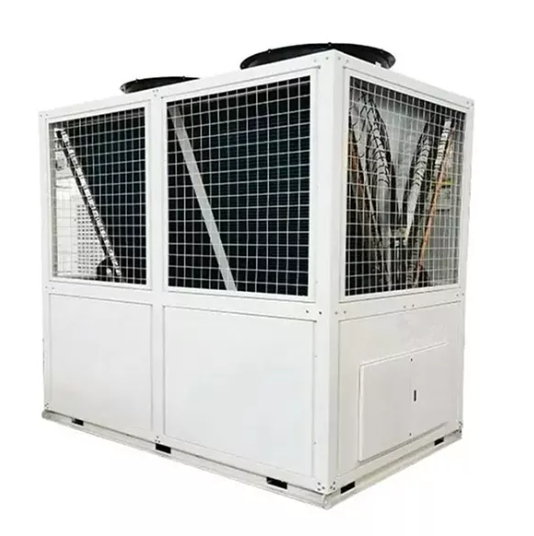
FKH-130II/TGW
LEOMON
| Availability: | |
|---|---|
| Quantity: | |
The LEOMON FKH-130II/TGW provides an alternative heating option for industrial processes requiring steam. Suitability should be evaluated against the required steam flow, pressure, operating schedule and site conditions.
Energy performance and potential operating cost savings depend on ambient temperature, feedwater conditions, electricity tariffs and the efficiency and fuel cost of the existing heating system. A project-specific comparison is recommended before equipment selection.

1. Centralized Steam Supply Capability
The 200kg/h steam flow can support dozens of process machines or a large area of heat tracing. A single unit simplifies maintenance and piping compared to multiple small boilers. The unit can also be combined with a steam accumulator for peak load smoothing.
2. Best-in-Class Efficiency for 150°C
Achieving a COP of 1.60, this model offers the highest absolute savings among the lineup due to its large capacity. Over a year of continuous operation, it saves approximately 392,000 kWh compared to an electric boiler.
3. Smart Centralized Control
The unit features a 7-inch HMI touchscreen with data logging, remote start/stop, and integration with SCADA systems. Facility managers can monitor steam pressure, temperature, cumulative energy savings, and fault history from a central control room.
4. Environmentally Friendly
Using R245fa or similar low-GWP high-temperature refrigerant, the unit has zero direct CO₂ emissions at the point of use. When powered by renewable electricity, it becomes a carbon-neutral steam generator, helping your plant meet emission reduction targets.
| Model | FKH-130II/TGW |
| Generate steam quantity | 200kg |
| Power Specifications | 380V 3N~50Hz |
| A1 heating capacity (20 ℃) | 130KW |
| A1 Heating consumption power | 81KW |
| Maximum operating current | 200A |
| Noise | ≤80dB(A) |
| Unit size (length x width x height mm) | 3260×1230×2400 |
| Steam connection size | DN40 |
| Size of water replenishment connection pipe | DN20 |
| Unit weight (kg) | 2100 |
| Compressor | Xecom |
| Refrigerants | Low stage: R515B High stage: R1233zd |
Industrial Process Heating
The FKH-130II/TGW can be evaluated for industrial applications requiring steam, including suitable processes in food and beverage production, textile processing and other manufacturing operations.
Selection must account for steam temperature, pressure, flow rate, daily operating hours and peak demand. Steam quality and hygiene requirements must also be reviewed where relevant.
For a technical assessment, please provide:
• Required steam flow in kg/h
• Required operating pressure, stating gauge or absolute pressure
• Feedwater temperature and water quality
• Site location and ambient temperature range
• Available power supply
• Existing boiler specifications and operating schedule
Typical installation time is 5–7 days, including integration with a SCADA system. The unit supports Modbus RTU for remote monitoring. Daily maintenance is limited to checking the HMI for alarms and logging steam pressure. Weekly: test the emergency stop and high-temperature cutout. Monthly: inspect the electrical terminals (tighten as needed) and clean the water inlet filter. An annual professional service includes replacing filter driers, checking the compressor oil, and calibrating temperature sensors. The unit’s dual-circuit design allows maintenance on one circuit while the other runs at reduced capacity, minimizing production interruptions.
Q1: What information is needed to select this model?
Please provide the required steam flow, operating pressure, feedwater temperature, site ambient conditions, electrical supply and daily operating hours.
Q2: What refrigerants does this model use?
Please request the current model-specific technical datasheet. The refrigerant configuration should be confirmed against the equipment specification supplied for your order.
Q3: How much energy can it save?
Savings depend on operating conditions, local energy prices and the existing heating system. A project-specific comparison is required; a fixed savings percentage should not be assumed.
Q4: Can it replace an existing boiler?
Replacement suitability depends on steam demand, pressure, load variation and site conditions. These requirements should be assessed before selecting the equipment.
Q5: Can condensate return be used?
Please provide the condensate temperature, water quality and return arrangement so that compatibility with the feedwater system can be reviewed.